



Key facts
U.S. chipmaker Advanced Nvidia has halted shipments of its licensed H200 artificial intelligence chips to China, interim CEO and Chief Financial Officer Colette Kress confirmed Tuesday, marking a sharp retreat from a market the company spent years fighting to retain.1 2
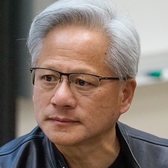
Speaking on Nvidia’s third-quarter earnings call—her first since co-founder Jensen Huang abruptly resigned last week amid an alleged extramarital affair involving a Chinese businesswoman linked to Beijing’s intelligence apparatus—Kress said the company has zeroed out future China data center revenue.1
Sales Of $2.4 Billion To China
While Nvidia recorded $2.4 billion in licensed H200 sales to China in the quarter ending Oct. 25, its overall quarterly revenue still more than doubled year-over-year to $115.8 billion, cushioning the financial blow.1
The pivot means the collapse of Huang’s long-standing lobbying doctrine in Washington..1 While the Donald Trump administration agreed in late 2025 to allow conditional H200 sales, issuing select licenses starting in February 2026 while barring more advanced Blackwell and Rubin processors, Huang had argued that selling downgraded chips kept Chinese developers dependent on U.S. technology.1
Following Huang’s exit, that argument has faced bipartisan rejection on Capitol Hill and inside the administration..1 Sen. John Kennedy (R-La.) has questioned earlier approvals of multi-billion-dollar chip sales, warning they effectively subsidize Beijing’s AI ecosystem rather than contain it.2
Meanwhile, Treasury Secretary Scott Bessent told CNBC that any “leakage” of high-end chips undermines America’s AI lead, and former Secretary of State Mike Pompeo warned that Beijing is racing to build a rival tech ecosystem to outpace the West.1
Washington Closes Loopholes
Washington is moving rapidly to close remaining loopholes..1 On Nov. 16, the Commerce Department’s Bureau of Industry and Security issued an interim final rule restricting Chinese firms from remotely accessing U.S. computing power via overseas cloud data centers, while adding licensing requirements for advanced chip shipments to Indonesia, Malaysia, Singapore, Thailand, and Brazil to prevent transshipment.1
Beijing condemned the Commerce Department’s latest restrictions on Tuesday, accusing Washington of violating prior leadership understandings and threatening retaliatory countermeasures, a warning that threatens to derail fragile progress on bilateral trade stability and AI risk governance.1
Huang’s Ouster And Leadership Transition
The announcement also comes amid a leadership transition at Nvidia..3 Harvey Jones was named the company’s first board chair last week, and the company announced a new board committee focused on national security and export controls.4
Nvidia has stopped shipping certain advanced artificial intelligence chips to China despite U.S. government approval for exports to eligible Chinese customers, and the company is excluding Chinese data center sales from its latest revenue forecast..3 Nvidia forecast fourth-quarter revenue of approximately $130 billion, plus or minus 3%, without factoring in sales of AI computing chips and systems to China.3
Jensen Huang said Tuesday that he would be willing to return to Nvidia’s top post if the board wanted him back, pointing to what he called an “outpouring” of support.4